
Unlock Drama logo for blog pages

From Engagement to Progression: The Impact of Theatre in Prison on Rehabilitation

Introduction: Can Theatre in Prison Drive Real Rehabilitation?
 
In the criminal justice system, one question continues to shape decision-making:
 
Do rehabilitation programmes actually lead to meaningful change?
At Unlock Drama, we deliver theatre in prison programmes designed to engage individuals who are not participating in education, training or rehabilitation.
 
While the emotional and behavioural benefits of prison theatre are widely recognised, there is increasing demand for measurable outcomes — particularly those linked to reducing reoffending and improving progression into education and employment.
Now, we have the data to evidence that impact.
 

Measured Impact: Theatre in Prison That Leads to Progression

This data comes from delivery at HMP Bullingdon as part of the Prison Education Dynamic Purchasing System (DPS) contract (2026).

The programme included:

  • 10 cohorts

  • 4-day intensive theatre in prison projects per cohort


Across this delivery:

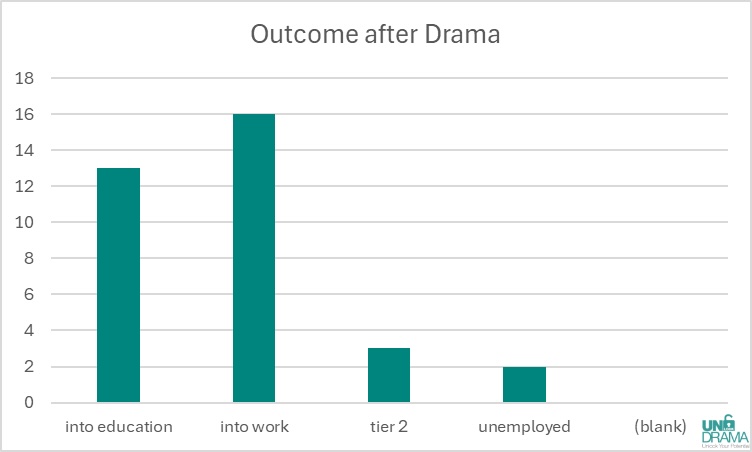
👉 94% of participants progressed into education, employment or structured activity (rising to 96% including those on waiting lists)

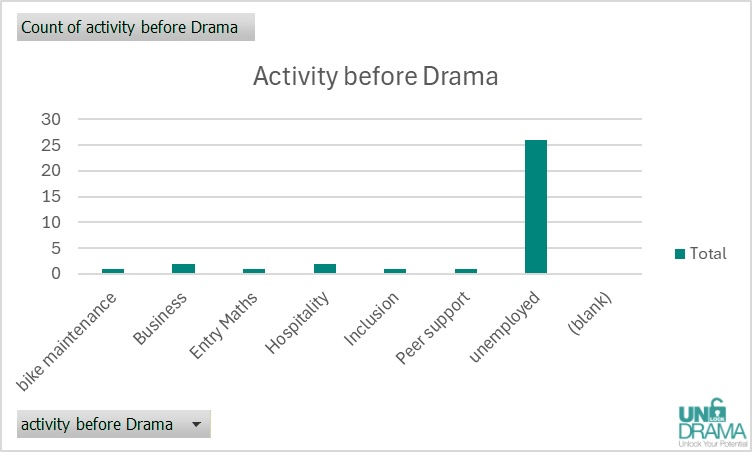
  • 76% of participants were unemployed before taking part

  • Just 6% remained unemployed after (2 participants on waiting lists)


These figures demonstrate a clear transition from disengagement to progression — a key objective within prison education programmes and rehabilitation strategies.


Why Theatre in Prison Works as a Rehabilitation Tool

Theatre in prison provides a unique and highly effective approach to rehabilitation.
Unlike traditional classroom-based learning, applied theatre is:
  • interactive
  • experiential
  • participant-led
 
This makes it particularly effective for individuals who may struggle to engage in conventional prison education or structured programmes.
 
Through prison theatre, participants are supported to develop:
  • confidence
  • communication skills
  • emotional awareness
  • the ability to work with others
 
These are critical life skills that underpin successful rehabilitation and support individuals in moving towards education, training and employment.
 

Bridging the Gap: Engaging the Hard-to-Reach

A key challenge within the prison system is engaging individuals who are not currently participating in any form of purposeful activity.
 
This is where theatre in prison programmes play a vital role.
 
Unlock Drama acts as a gateway — engaging individuals who are often considered hard-to-reach and supporting them to take their first step into structured activity.
 
By creating a safe, creative and supportive environment, participants are able to:
  • build trust
  • express themselves
  • develop confidence
  • re-engage with learning
 
This process enables progression into:
  • education
  • training
  • employment
  • wider rehabilitation pathways
 
This is what we mean when we say we bridge the gap.
 

Human Impact: Beyond the Statistics

While the data is significant, the human impact of prison theatre is equally powerful.
 
Participants frequently describe the experience as:
 
👉 “life changing”
 
Across delivery, we have seen individuals:
  • engage in group work for the first time
  • overcome social anxiety
  • develop confidence and self-belief
  • begin to see new possibilities for their future
 
For many, theatre in prison is the first step towards re-engaging with education and rehabilitation.
 

The Role of Theatre in Reducing Reoffending

There is growing recognition that creative rehabilitation programmes, including prison theatre, can play a key role in reducing reoffending.
 
By developing transferable skills and supporting progression into purposeful activity, these programmes contribute to:
  • increased engagement
  • improved wellbeing
  • stronger social connections
  • greater motivation to change
 
When individuals are supported to move into education, training or employment, the likelihood of reoffending decreases.
 
This positions theatre in prison not only as an engagement tool, but as a meaningful contributor to long-term rehabilitation outcomes.
 

Conclusion: From Engagement to Long-Term Change

Theatre in prison is not just about performance.
 
It is about progression.
 
It is about supporting individuals to:
  • re-engage with education
  • develop life skills
  • build confidence
  • move forward into meaningful activity
 
The data from HMP Bullingdon demonstrates that theatre in prison programmes can deliver measurable, real-world outcomes.
 
As the sector continues to focus on effective rehabilitation and reducing reoffending, there is a clear opportunity for prison theatre to play a central role in that journey.
 
Share the Post:

Related Posts

Unlock Drama logo for blog pages

How Unlock Drama Supports Rehabilitation Pathways

Rehabilitation is not achieved through a single intervention. It is a process that requires individuals to build confidence, develop skills, reflect on behaviour, and engage with the support available to them. Within the criminal justice system, this process is often

Read More

Help us at Unlock Drama keep transforming lives using theatre to rehabilitate.